Stoneware, porcelain or earthenware? Choosing handmade ceramics that last
The three families of clay explained, plus how to check a handmade mug or bowl is food-safe and durable.
We independently choose everything we write about. Some outbound links are affiliate links, which help keep this site running at no cost to you. How we earn.
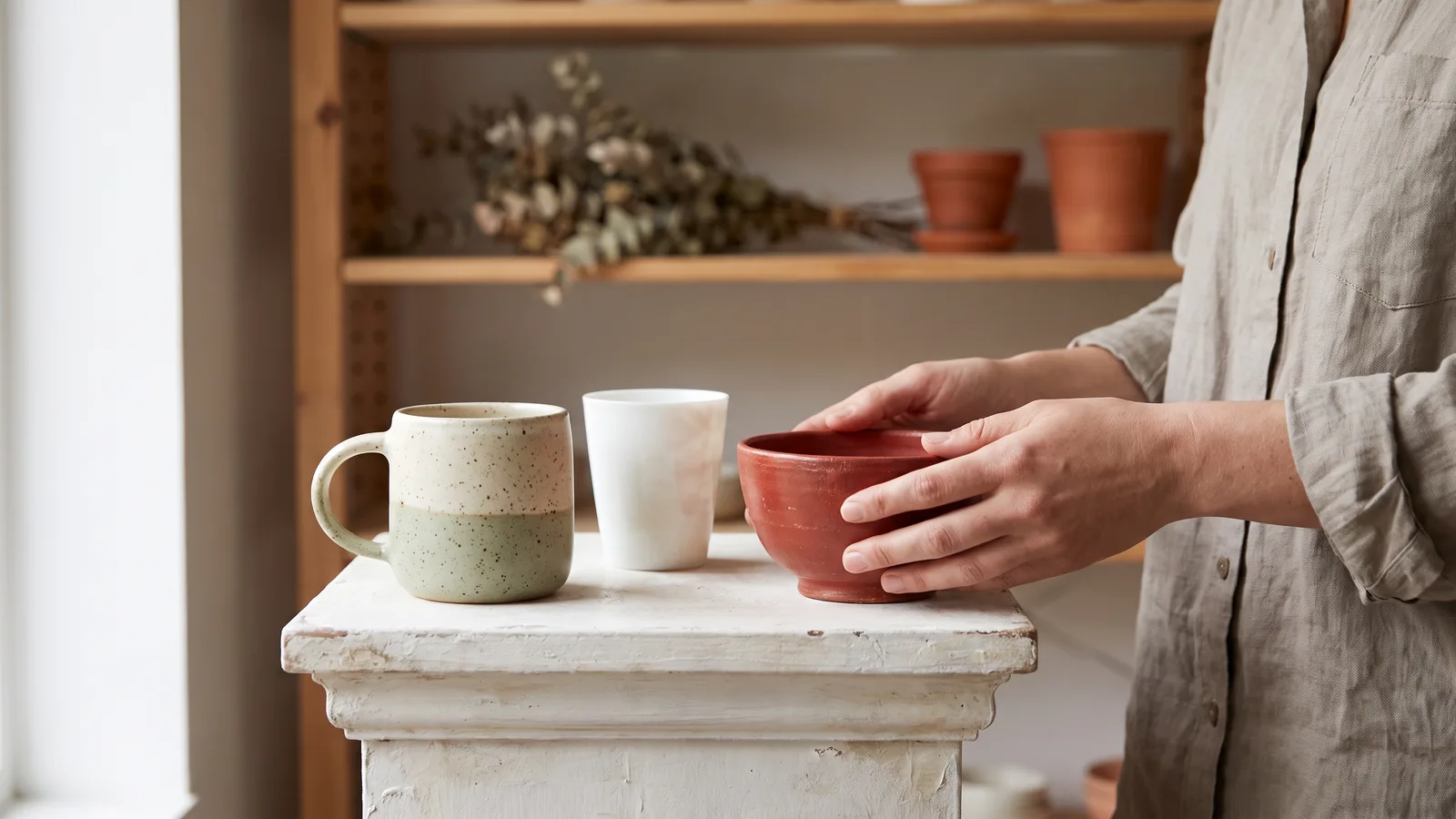
A handmade mug is one of the best small gifts there is: used every day, held in both hands, and never quite the same as anyone else's. But ceramics come in three very different families, and knowing which one you're buying tells you a lot about how it will live in a real kitchen.
Earthenware: warm, rustic, more delicate
Earthenware is fired at the lowest temperatures (roughly 1,000–1,150°C). The clay stays slightly porous after firing, so it relies on its glaze to hold liquids. It's often reddish or buff in colour and has a soft, rustic look; think terracotta pots and traditional painted pottery.
- Pros: beautiful, earthy colours; often more affordable.
- Cons: chips more easily; if the glaze cracks, it can absorb water.
- Best for: serving bowls, decorative pieces, plant pots.
Stoneware: the everyday workhorse
Stoneware is fired hotter (around 1,200–1,300°C), which makes the clay body vitrified: dense, non-porous and strong. Most handmade mugs, plates and bowls you'll find are stoneware, and for good reason.
- Pros: durable, chip-resistant, usually dishwasher- and microwave-safe (check the listing).
- Cons: heavier; can feel a bit chunky.
- Best for: mugs, dinnerware, baking dishes, anything used daily.
Porcelain: fine, white, surprisingly tough
Porcelain is fired at the highest temperatures and uses a fine white clay. It can be thrown very thin, even translucent when held up to the light, yet it's harder than you'd expect.
- Pros: elegant; smooth; takes glazes beautifully; very hygienic.
- Cons: usually more expensive; thin rims can chip if knocked.
- Best for: tea cups, fine tableware, gifts for someone who appreciates detail.
Is it food-safe?
This is the question that matters most, and a good potter will answer it without hesitation. Look for:
- "Food-safe glaze" stated clearly in the listing.
- Lead-free glazes (reputable makers state this outright).
- Whether the inside of the piece is glazed. Unglazed interiors on cups are rare and not ideal for daily use.
If a listing says "decorative only", believe it. Some beautiful glazes (certain crackle or crawling effects) aren't meant for food.
Dishwasher and microwave?
Most stoneware and porcelain is fine in both, but:
- Metallic lustres (gold or platinum rims) must never go in the microwave and are usually hand-wash only.
- Raw clay bottoms (the unglazed foot ring) can get hot in the microwave.
- Even dishwasher-safe pieces keep their glaze longer if hand-washed.
Reading a ceramic listing
A well-written listing will tell you:
- Clay type (stoneware, porcelain, earthenware)
- Capacity in ml or oz, a far more useful number than "large"
- Whether it's wheel-thrown, hand-built or slip-cast
- Glaze safety and care instructions
- That each piece varies slightly, which is part of the charm
Wheel-thrown means shaped on a potter's wheel. Hand-built means formed by pinching, coiling or slab-rolling. Slip-cast means liquid clay poured into a mould. Slip-casting allows consistent shapes, and many small studios use it while still glazing and finishing every piece by hand.
Our gift advice
For a first handmade ceramic gift, choose a stoneware mug of 300–400 ml with a glazed interior and a handle big enough for two fingers. It's practical, forgiving and used every single day. Browse wheel-thrown stoneware mugs, and read our holiday gift guide for more ideas.