Linen at home: why it's worth it, and how to look after it
Linen gets softer every year. A short guide to choosing, washing and living with linen bedding, napkins and aprons.
We independently choose everything we write about. Some outbound links are affiliate links, which help keep this site running at no cost to you. How we earn.
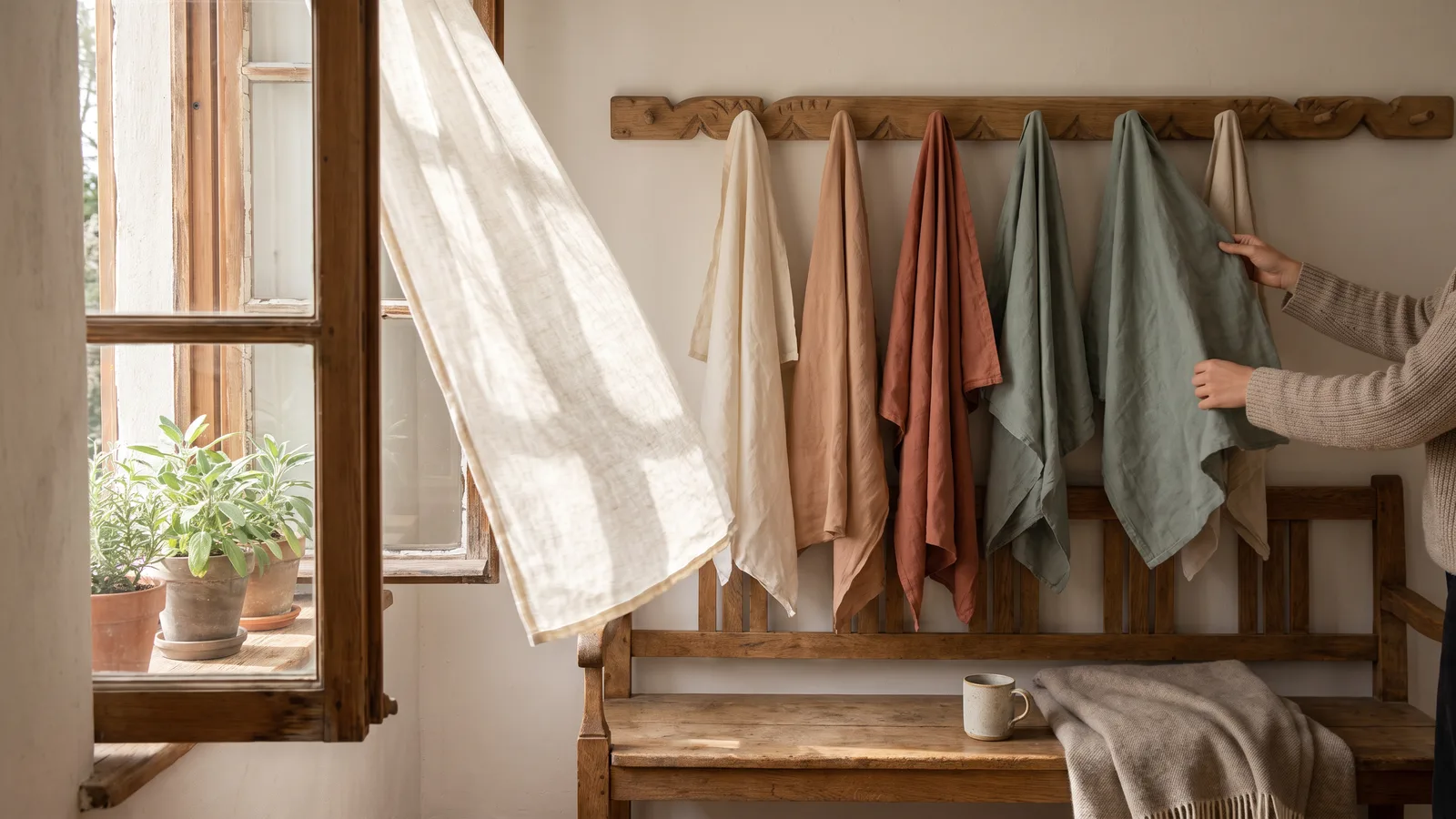
Linen is one of the oldest textiles in the world, woven from the fibres of the flax plant. It's also one of the most satisfying to own: it starts out crisp, then softens with every wash until it feels like the most comfortable thing in the house. Small weavers and sewists across Europe, especially in Lithuania, Latvia, Poland and Belgium, still make beautiful linen goods, and they make wonderful gifts.
Why linen?
- Breathable: linen wicks moisture and dries fast. It's cool in summer and comfortable year-round.
- Durable: flax fibres are among the strongest natural fibres. Well-made linen lasts for decades.
- Gets better with age: unlike cotton, which thins, linen softens and develops a lovely lived-in drape.
- Lower impact: flax generally needs less water and fewer pesticides than cotton, and grows well in Europe's climate.
"Stonewashed" and "pre-washed"
Most handmade linen goods are pre-washed or stonewashed, meaning softened and pre-shrunk before they reach you. That gives the relaxed, rumpled look and means far less shrinkage later. If a listing doesn't say, ask; unwashed linen can shrink several per cent on its first wash.
Fabric weight
Linen is often described by weight in grams per square metre (gsm):
- ~120–160 gsm: light, for summer shirts and dresses.
- ~160–200 gsm: medium, the classic weight for bedding, napkins and tablecloths.
- ~200+ gsm: heavy, for aprons, cushion covers and upholstery.
How to wash linen
- Wash at 30–40°C with a mild detergent. Avoid bleach and optical brighteners.
- Don't overload the machine; linen needs room to move.
- Skip fabric softener. It coats the fibres and makes linen less absorbent. Linen softens on its own.
- Line-dry if you can, or tumble on low and remove while slightly damp.
- Embrace the wrinkles, or iron while still damp for a crisp finish.
Storing linen
Keep linen in a cool, dry, well-ventilated place. Avoid plastic bags, as linen needs to breathe. A sprig of lavender in the cupboard is traditional and keeps things fresh.
The best linen gifts
- Linen napkins (a set of four or six), the easiest upgrade to any dinner table.
- An apron for a cook, baker or gardener; look for cross-back straps and deep pockets.
- A tea towel set: absorbent, lint-free and much nicer than cotton.
- Pillowcases, the gateway to linen bedding.
- A linen tablecloth for someone who hosts.
Browse stonewashed linen napkins, cross-back linen aprons or linen tea towels.