Soy, beeswax, coconut or paraffin? A candle buyer's guide
What different waxes mean for burn time, scent and soot, and the simple habits that make any candle last longer.
We independently choose everything we write about. Some outbound links are affiliate links, which help keep this site running at no cost to you. How we earn.
Hand-poured candles are a classic gift for a reason: they're affordable, they make a room feel different the moment they're lit, and almost everyone enjoys them. But "hand-poured soy candle" is now on thousands of listings, and the quality varies a lot. Here's what's actually worth knowing.
The waxes
Soy wax is made from hydrogenated soybean oil. It burns slower and cooler than paraffin, holds fragrance well and cleans up with soap and water. It's the most common wax among small makers. Many "soy" candles are blends, and that's fine, but good makers say so.
Beeswax is produced by bees and has a natural, faint honey scent and a warm golden colour. It burns slowly and brightly, which is why it's prized for pillar and taper candles. It's usually more expensive and is often left unscented.
Coconut wax (usually a coconut-soy or coconut-apricot blend) is creamy, burns evenly and throws scent beautifully. It tends to be used in more premium candles.
Paraffin is a petroleum by-product. It's inexpensive and has a strong scent throw, but tends to produce more soot. Many people now prefer natural waxes, but plenty of well-made candles still use paraffin blends.
Scent: fragrance oils vs essential oils
- Fragrance oils are designed for candles; good ones are tested for safe burning and produce a strong, consistent scent.
- Essential oils are plant-derived; they smell lovely but can be subtler when burned, and not all are suitable for candles.
Neither is automatically better. What matters is that the maker uses oils formulated for candle making and in the right proportions. Look for listings that mention phthalate-free fragrance oils.
Wicks: cotton or wood
Cotton wicks are the standard. Wooden wicks crackle gently, like a tiny fireplace, and give a wide, flat flame; they're lovely but need a little more care (keep them trimmed short).
How to make any candle last longer
- Let the first burn reach the edge. On the first light, burn until the melted wax reaches the sides of the container, usually 2–3 hours. Otherwise the candle "tunnels" and wastes wax for the rest of its life.
- Trim the wick to about 5 mm (¼ inch) before each burn to prevent soot and big flames.
- Don't burn for more than 4 hours at a time.
- Keep away from drafts: they cause uneven burning and smoke.
- Stop when 1 cm of wax is left so the container doesn't overheat.
Safety first
Never leave a candle unattended, keep it away from children, pets and curtains, and place it on a heat-resistant surface. Good makers include a safety label on every candle, and in the EU this is expected under general product safety rules.
Reuse the vessel
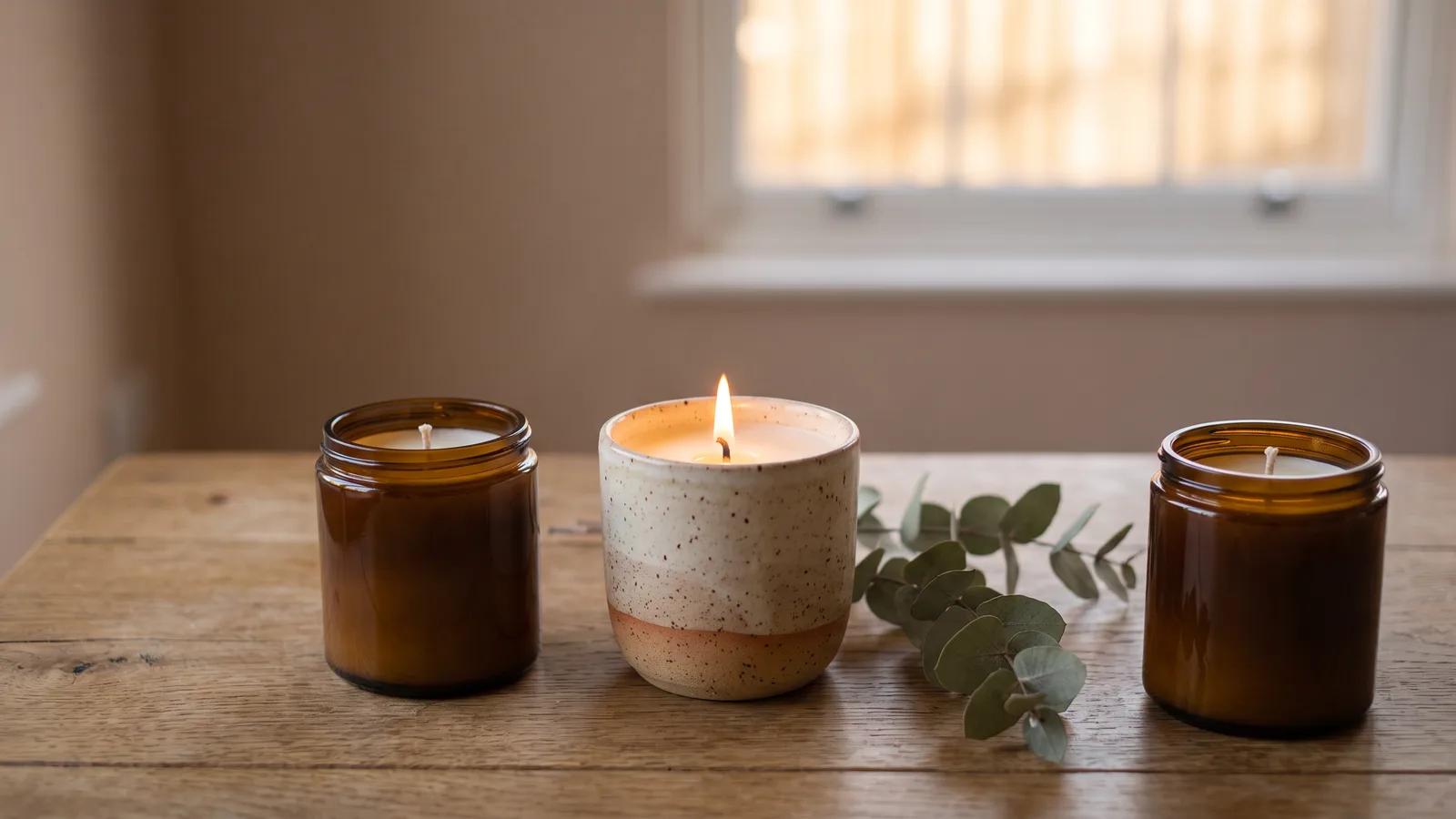
Many small makers pour into beautiful vessels: ceramic, amber glass, concrete. When the candle's done, freeze it for a few hours and the leftover wax pops out. Wash with warm soapy water, and you have a pen pot, a planter or a tiny vase.
What makes a candle a good gift
- A scent that isn't too polarising: woody, fresh linen, fig, or citrus usually please more people than heavy gourmand vanilla.
- A vessel worth keeping.
- A clear burn time on the label (e.g. "approx. 45 hours").
Browse candles in handmade ceramic vessels or beeswax tapers to compare makers.