How to buy vintage online with confidence
Reading condition notes, measuring properly and asking the right questions, so a vintage find feels like a treasure and not a gamble.
We independently choose everything we write about. Some outbound links are affiliate links, which help keep this site running at no cost to you. How we earn.
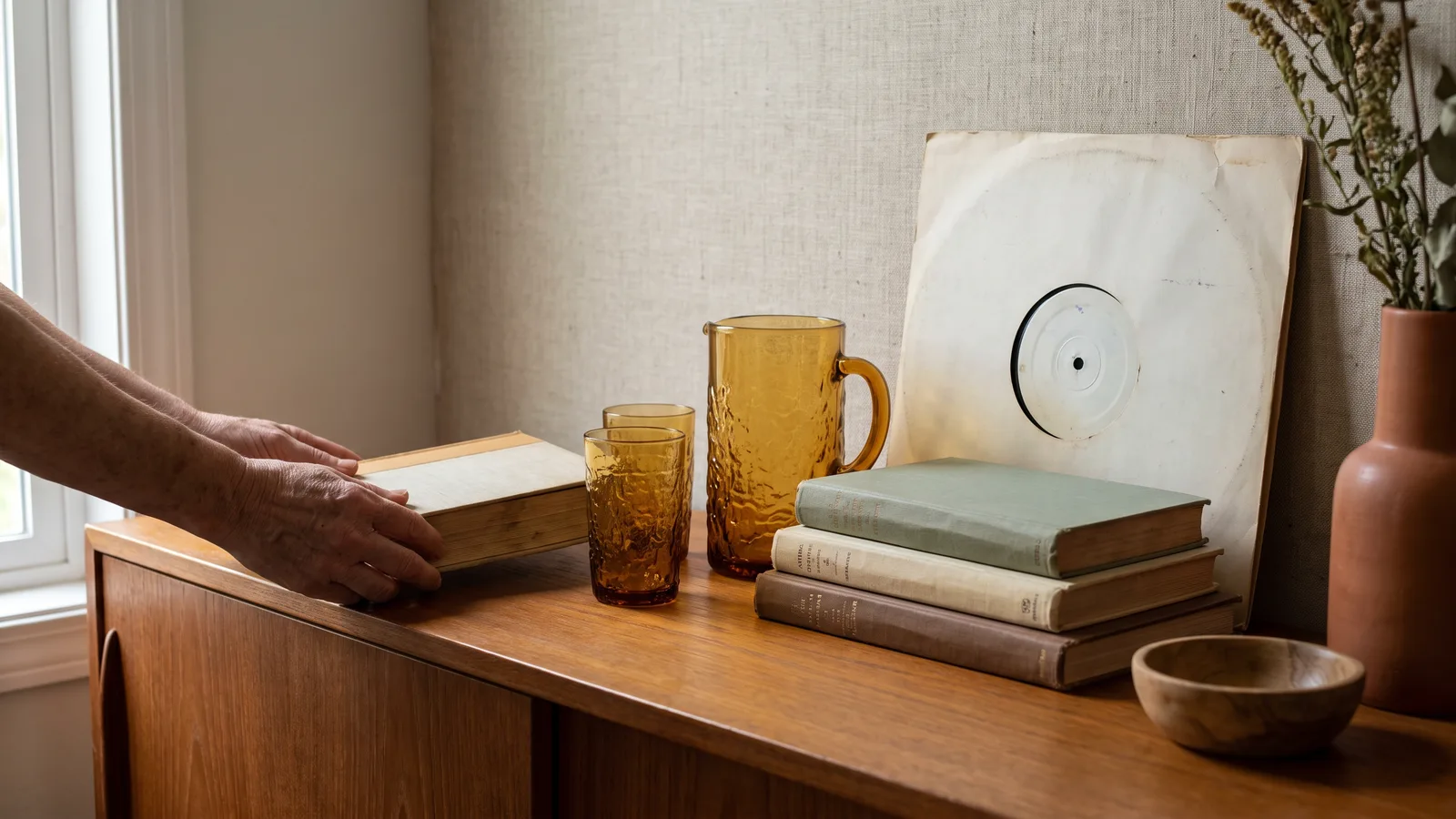
Buying vintage is half treasure hunt, half detective work. The thrill is finding something no one else has: a 1970s glass carafe, a hand-embroidered tablecloth, a first pressing of a favourite album. The risk is that the piece arrives smaller, more worn or less "vintage" than you hoped.
These are the habits that make the difference.
Know what "vintage" means
There's no legal definition, but on Etsy an item must be at least 20 years old to be listed as vintage. "Antique" generally means 100 years or more. "Vintage-style" or "retro" means new, made to look old. Nothing wrong with that, as long as it's labelled honestly.
Read the condition notes like a contract
Good vintage sellers describe flaws in detail: "small chip on base, see photo 6", "light foxing on corners", "faint mark on left sleeve". That's a sign of honesty, not a reason to walk away. Be more careful when a listing says only "good vintage condition" with no detail.
Common terms:
- Mint / near mint: looks unused.
- Excellent: minimal signs of age.
- Good: visible but minor wear consistent with age.
- Fair / as is: noticeable flaws; often sold for repair or display.
Look at every photo, then zoom
Check edges, bases, seams, hinges and labels. Look for:
- Glass and ceramics: chips on rims, hairline cracks, crazing (fine network of cracks in glaze), cloudiness in glass.
- Textiles: moth holes, stains under arms, fading along folds, weak seams.
- Wood: loose joints, water rings, worm holes (old, inactive holes are usually fine).
- Metal: rust, dents, worn plating.
If the photos are dark or few, ask for more. Good sellers expect it.
Measure, don't trust sizes
A vintage dress labelled "size 12" may fit like a modern 8. Ask for (or check) flat measurements: chest, waist, hips, length. Then compare them with something you already own and love. The same applies to frames, furniture and tableware: always check centimetres, not descriptions like "large".
Ask about smells and storage
It's a fair question: "Does it come from a smoke-free home?" or "Has it been cleaned?" Mustiness can often be aired out of fabrics and books, but smoke can be stubborn.
Vinyl records: two gradings
Records are usually graded on both the vinyl and the sleeve, often using the Goldmine scale (Mint, Near Mint, VG+, VG, Good, Poor). VG+ is a sweet spot for listening: light signs of play but no effect on sound. If it's a gift for a collector, ask about the pressing (country, year, catalogue number).
Shipping fragile vintage
Ask how the seller packs glass and ceramics. Double-boxing is the gold standard. For valuable items, pay for tracking and insurance. Check the return policy too; many vintage sellers don't accept returns, which is reasonable, so you'll want your questions answered before you buy.
Caring for your find
- Glassware: hand-wash only; dishwashers cause clouding over time.
- Linens: soak in cool water with a gentle detergent; dry flat, away from direct sun.
- Wood: dust with a soft cloth; feed occasionally with furniture wax.
- Records: store upright, in inner sleeves, away from heat.
Why it's worth it
Vintage is the original sustainable shopping: nothing new is made, and the object gets another life. It also makes for unforgettable gifts, because it comes with a story attached.
Some of our favourite places to start: 1970s glassware, embroidered linens and first-pressing vinyl.