Sterling, gold-filled, vermeil or plated? A plain-English guide to jewelry metals
What the labels really mean, how long each lasts, and which to choose for an everyday gift.
We independently choose everything we write about. Some outbound links are affiliate links, which help keep this site running at no cost to you. How we earn.
Jewelry descriptions are full of words that sound alike and mean very different things. "Gold-filled" is not the same as "gold-plated", and "silver-tone" isn't silver at all. Here's how to read the labels so the necklace you give still looks good a year from now.
Solid gold (9k, 14k, 18k)
Gold is measured in karats: 24k is pure gold, which is too soft for most jewelry. 14k (58.5% gold) is the sweet spot for everyday pieces: hard-wearing, warm in colour, and it won't tarnish. 9k (37.5%) is common in the UK and more affordable; 18k (75%) is richer in colour and softer.
Best for: pieces meant to last a lifetime, such as wedding bands, a first "real" necklace, or anything worn every day.
Sterling silver (925)
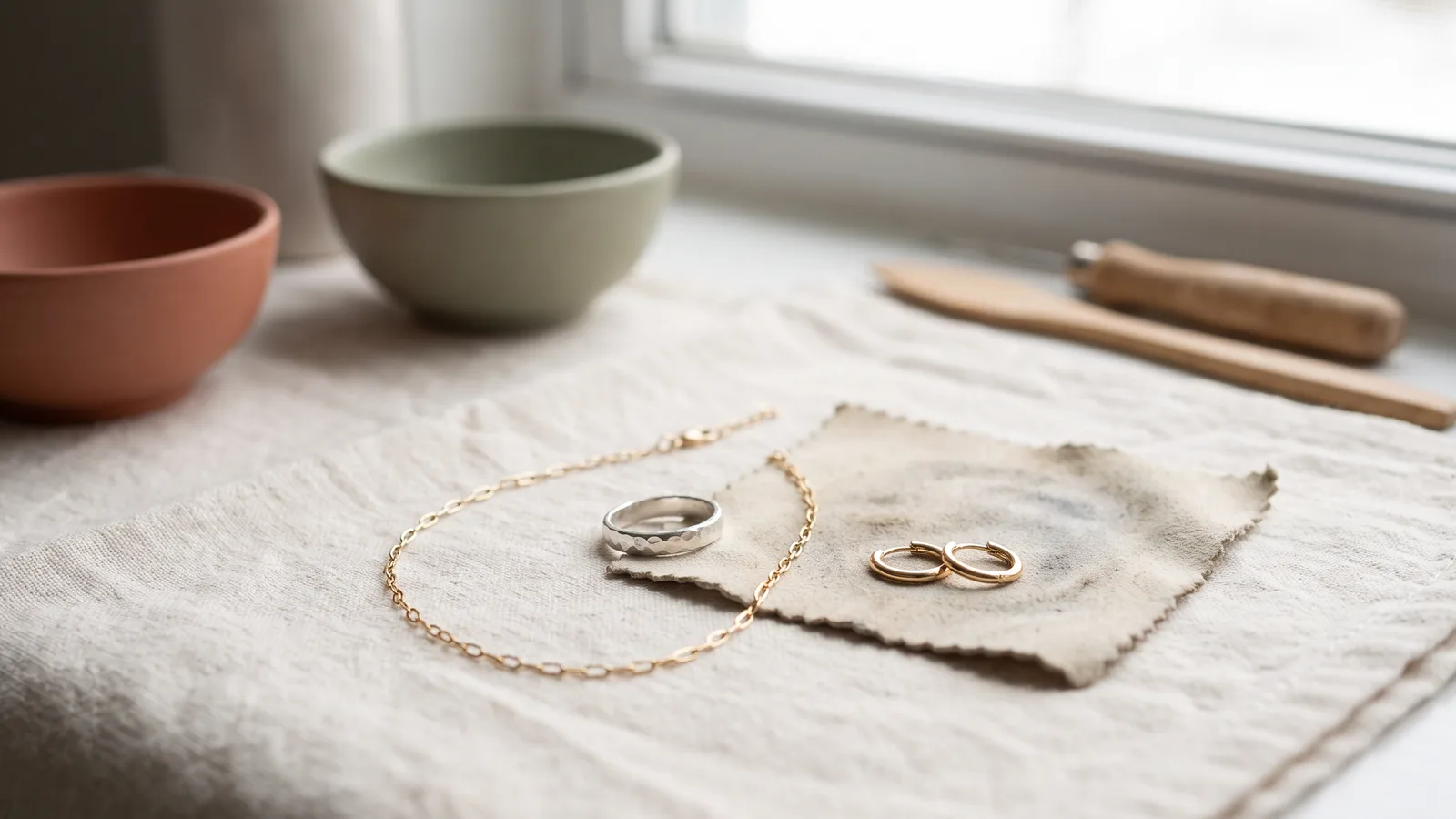
Sterling silver is 92.5% silver mixed with other metals (usually copper) for strength. That's why you'll see "925" stamped on genuine pieces. Sterling does tarnish, a natural darkening caused by sulphur in the air, but it polishes back easily with a cloth, and wearing it often actually slows tarnish down.
Best for: everyday jewelry at a reasonable price; people who like a cool, bright metal.
Gold-filled
Gold-filled jewelry has a thick layer of gold mechanically bonded to a base metal (usually brass). By US trade rules, the gold must make up at least 1/20 (5%) of the total weight, which is why you'll see "14/20 gold-filled". That layer is many times thicker than plating, so with normal care it can last for years without wearing through.
Best for: the look of gold on a budget, for people who will wear it often.
Gold vermeil
Vermeil (pronounced ver-may) is sterling silver with a gold layer on top. In the US, to be called vermeil, the gold must be at least 10k and 2.5 microns thick. It's a step up from plating, but the layer is still thinner than gold-filled, so it will eventually wear on high-friction pieces like rings.
Best for: earrings and necklaces that don't rub against much.
Gold-plated
Plating is a very thin layer of gold applied electrically over a base metal, often less than half a micron. It looks lovely on day one but can wear through in weeks or months with daily wear, especially on rings and bracelets.
Best for: fashion pieces and occasional wear, or when the design matters more than longevity.
"Gold-tone", "silver-tone", "stainless steel"
"Tone" means colour only: there's no precious metal involved. Stainless steel, on the other hand, is genuinely durable, hypoallergenic for most people and tarnish-resistant; it's a good choice for active people and for kids' first jewelry.
Quick comparison
| Metal | Tarnish? | Wears through? | Typical price |
|---|---|---|---|
| 14k solid gold | No | No | $$$ |
| Sterling silver | Yes, polishes off | No | $ |
| Gold-filled | Rarely | Rarely, with care | $$ |
| Vermeil | Sometimes | Eventually on rings | $$ |
| Gold-plated | Often | Yes | $ |
Questions to ask a maker
Small jewelers are usually happy to answer:
- What exactly is the metal, and what's the base metal under any plating?
- Is the chain the same metal as the pendant? (A common trick is a solid pendant on a plated chain.)
- Is it nickel-free?
- How should it be cleaned and stored?
Care in one paragraph
Put jewelry on last, after perfume and lotion, and take it off first: before swimming, showering or the gym. Store pieces separately in a small pouch or a lined box so they don't scratch, and polish silver with a soft cloth when it darkens.
If you're shopping for a first good piece, browsing handmade gold-filled necklaces or hand-forged sterling rings is a good place to compare makers who list their metals clearly.