How to tell if something is really handmade
Seven quiet clues that separate a maker's work from mass-produced stock with a "handmade" label.
We independently choose everything we write about. Some outbound links are affiliate links, which help keep this site running at no cost to you. How we earn.
"Handmade" is one of the most generous words in shopping, and one of the most abused. Online marketplaces are full of genuine makers working at a kitchen table or a small studio. They also host resellers who buy the same factory item as a hundred other shops and photograph it on a linen tablecloth.
You don't need to be an expert to tell the difference. Here are the clues we look for before we write about anything.
1. The photos show the same object, not a catalogue
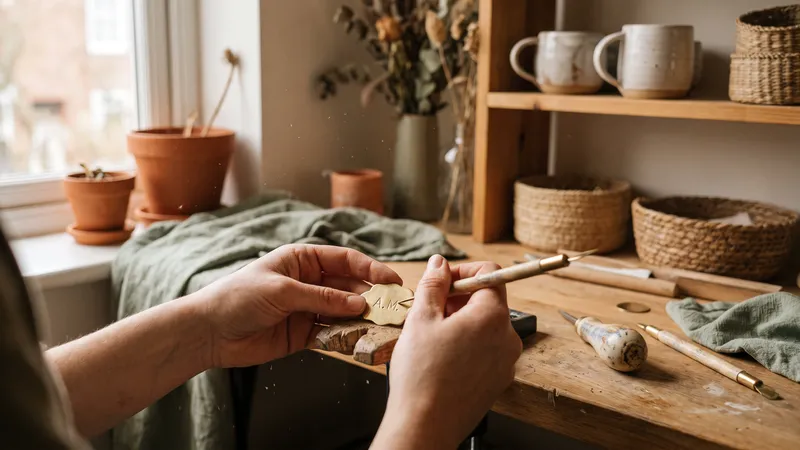
Real makers usually photograph their work in their space: the same window light, the same wooden table, sometimes a hand or a workbench at the edge of the frame. Be cautious when every photo has a different background, perfect studio lighting and a white backdrop that looks exactly like a wholesale catalogue.
A quick test: save one image and run a reverse image search. If the same photo appears in thirty shops, you've found a reseller.
2. Small variations are mentioned, not hidden
Handmade objects vary. Glazes pool differently, wood grain is never identical, hand-stamped letters sit slightly unevenly. Honest makers say so in the description ("each piece is unique; yours may differ slightly from the photos"). Mass-produced items are described as if every one were identical, because they are.
3. The materials are specific
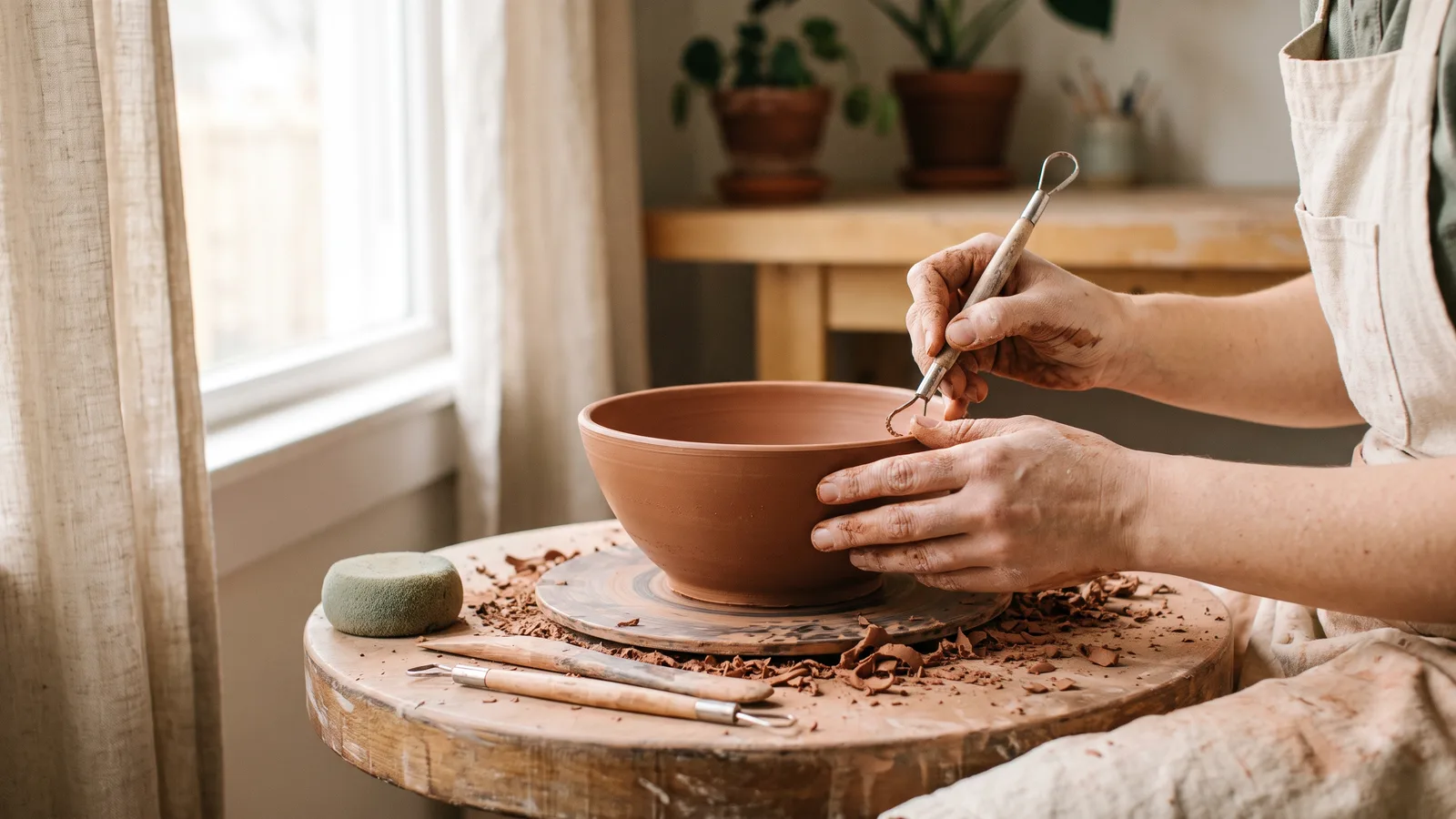
Compare "high-quality metal" with "recycled 925 sterling silver, 1.2 mm wire". Or "ceramic cup" with "wheel-thrown stoneware, fired to cone 6, food-safe glaze". People who make things know exactly what they're made of and usually can't resist telling you. Vague materials are the single biggest red flag we see.
4. Processing time is realistic
Made-to-order work takes time. A hand-knitted blanket that ships in 24 hours, in twelve colours and five sizes, was almost certainly not knitted for you. Most makers list a processing time of a few days to a few weeks before shipping, and that's a good sign, not a bad one.
5. The shop's range makes sense
A potter with mugs, bowls and vases makes sense. A "handmade" shop selling phone cases, wedding dresses, garden gnomes and LED strips does not. Scroll through the whole shop: a real maker's range usually looks like one person's hands and taste.
6. There's a person behind the "About" section
Look for a name, a story, photos of the workspace, a note on how they learned their craft. Not every maker is chatty, and that's fine. But a completely empty profile combined with thousands of sales and generic photos is worth a second look.
7. Reviews mention the maker
Read a page or two of reviews, not just the star average. Genuine shops collect comments like "she answered all my questions about the engraving" or "packaged with a handwritten note". Reviews that only talk about fast shipping and price are typical of drop-shipped goods.
What about "designed by" items?
Not everything that's good is fully handmade. Many small studios design their own products and work with a small workshop or a print partner to produce them: think illustrated prints, enamel pins or printed textiles. That's perfectly legitimate, and marketplaces like Etsy have rules requiring sellers to disclose production partners. The key word is disclosed. A shop that tells you openly how something is made has nothing to hide.
A simple checklist
Before you buy, ask yourself:
- Do the photos look like one maker's work?
- Are materials described precisely?
- Is the processing time realistic for something made by hand?
- Does the shop's range look like one person's craft?
- Do reviews mention the human behind the shop?
Three or more "yes" answers and you're probably in good hands. When we put together our gift guides, we run every type of item through these same questions, and if you'd like to start browsing, searching for made-to-order pieces is a good way to surface makers rather than resellers.